


Rotate Rings
4.82.32K Reviews
App Specs
- Version
- 1.1.6
- Updated On
- License
- Free
- Downloads
- 10,000,000+
- Developer
- Nebula Studio
- Categories
- Puzzle
- Platform
- Android
Screenshots


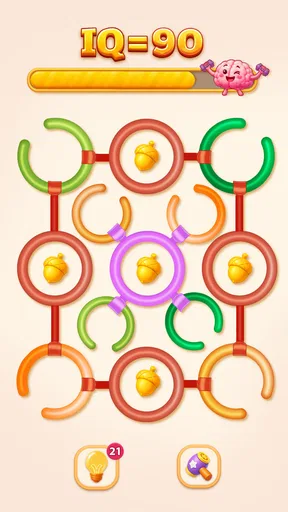
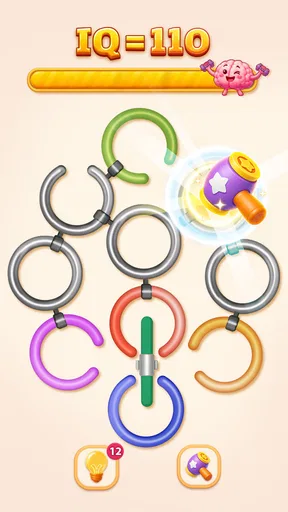
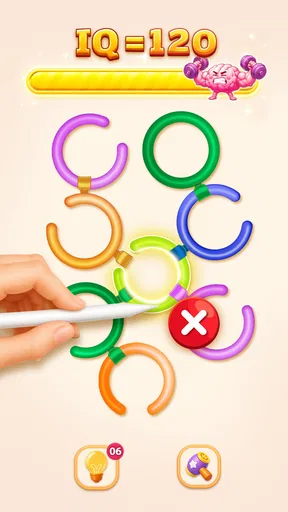
 Analysis by AppCompare
I’m drawn to puzzle games that ask for a little concentration without demanding a whole evening. Rotate Rings looks suited to that kind of pause: its central idea is turning rings to solve logic challenges, rather than chasing a story or competing against a clock. After spending time with this style of puzzle, I’d describe its appeal as quiet and focused. It is a game for noticing how pieces relate and making deliberate adjustments, not for constant action.
That focus also makes it easy to fit around ordinary routines. I can imagine opening it while waiting for a delayed appointment, playing a puzzle or two, then putting the phone away without needing to remember a plot or manage a long run. It is a better match for short stretches of attention than for someone looking for a game to occupy an entire evening.
How the ring puzzles feel to play
The rotating-ring format gives each move a clear purpose: change the arrangement, then see whether the pieces line up as intended. That simple interaction is easy to understand, but a satisfying solve still depends on thinking ahead. I like puzzles where a small adjustment can affect more than one part of the arrangement, because they reward looking at the whole board instead of tapping at random.
That also means the best way to approach a tricky board is to pause before moving. I’d first identify what already looks correct, then work out which ring could change the remaining pieces without undoing that progress. This is a useful habit for a game built around rotation: treat each move as a choice with consequences, rather than spinning until the answer appears.
One practical refinement is to work from relationships, not just individual pieces. If a move seems to put one piece in the right place, check what else that rotation would affect before committing to it. This helps avoid the tempting but often unhelpful habit of fixing one visible mismatch at a time, which can disturb a larger pattern that was already close to correct.
The strongest fit is a short, low-pressure session, such as a few puzzles during a break or a quiet stretch before bed. The game’s puzzle focus gives that time a small mental task without requiring the commitment of a long campaign. If you want a game that fills a commute with rapid action, this is a different sort of companion; if you want to give your attention one manageable problem, the format makes sense.
Its offline play is particularly practical. I can see it fitting moments when a connection is unreliable or when I want to keep a game session separate from browsing and notifications. It also makes the basic use case straightforward: open the game, focus on the rings, and spend a little time reasoning through the puzzle. That convenience is more meaningful here than a promise of elaborate systems would be.
Worth Reading Before You Choose

Switching to Android Auto Means Rethinking Your Driving Routine

Google Calendar Makes a Crowded Week Easier to Manage

Baby Panda World Brings Quick Play to Modern Phones, but Its Game Library Feels Busy

ESPN’s Live Game View Makes Following Close Games Easier

QuizzLand Review: A Good Fit for Short Trivia Breaks, Not Every Player

Basketball Stars: Multiplayer Is Fast, but Can It Recover When Matches Go Wrong?
Offline access can also change where a puzzle game feels useful. On a train or in a waiting room, I don’t have to plan around a dependable connection to use the core game. I’d still treat the offline angle as a convenience rather than a reason to expect every possible store or account function to work without internet; the practical point is that the puzzle activity itself is suited to disconnected moments.
Progress without a rush
Rotate Rings is presented as a relaxing logic game, and that framing matters. Ring puzzles can be absorbing, but they can also become frustrating if a player feels pushed to act quickly. I prefer to approach each challenge at my own pace: make one considered move, check the result, and adjust my plan if the board has changed in an unexpected way. That is a more reliable workflow than making a string of guesses.
A concrete tip is to use the visible arrangement as a record of your reasoning. Before rotating anything, mentally mark the pieces or positions you believe are already settled. After a move, check whether those relationships remain intact. This helps separate a useful move from one that merely looks promising, and it can keep a puzzle from turning into aimless trial and error.
For a short session, I’d also set a natural stopping point before starting: finish the current puzzle, then decide whether I actually want another. That small boundary is useful when a game is easy to pick up in spare moments, because it keeps a relaxing break from becoming a vague stretch of repeated play. It is a personal approach, not a feature of the game, but it suits a puzzle loop that asks for attention one board at a time.
There is a trade-off, though. A compact mechanic can be calming because it keeps the rules centered on one kind of interaction, but it may feel repetitive to someone who wants every level to introduce a very different tool or objective. I would choose this over a sprawling puzzle adventure when I want a clean, contained challenge. I would choose a game with broader mechanics when novelty and variety are the main reasons I play.
Compared with match-style puzzles, the appeal here is less about spotting a quick combination and more about considering how a rotation changes an arrangement. Compared with narrative puzzle adventures, it asks less of the player’s memory for story and more of their attention to the current board. Those alternatives may be better if you want frequent visual surprises, a campaign to follow, or a faster rhythm; the ring format is strongest when you enjoy deliberate spatial reasoning.
The game is free, which lowers the barrier to trying it. That is useful if you are unsure whether rotating-ring puzzles suit you: the core idea is easy to judge by playing rather than committing to a purchase first. Still, “free” alone does not tell me how optional purchases, if any, might affect the experience. I wouldn’t assume anything about spending or progression from the price alone.
Fairness, spending, and what can be judged
For a logic puzzle, fairness is less about reflexes and more about whether the challenge gives the player a reasonable chance to understand the board and improve through thought. The rotation mechanic offers a clear basis for reasoning: observe the arrangement, choose a ring, and evaluate the result. In my view, that is a promising foundation for fair play, because success can come from planning rather than speed.
But the purchase details available here establish only that the game is free. They do not establish whether it contains optional purchases, ads, paid hints, or any other spending system, so I can’t responsibly claim that progress is entirely free of purchases or that payment has no influence. If that distinction matters to you, check the current store and in-game purchase information before settling in. I would not treat an unconfirmed monetization detail as either a benefit or a drawback.
That is also the sensible answer to a common first-time concern: does free mean there is nothing to pay for? The free price tells me the game can be tried without an upfront purchase, but it does not settle what other spending options may exist. I’d check the purchase disclosures before handing the phone to a child or deciding whether to make it a regular part of my routine, rather than rely on assumptions either way.
The same care applies to competitive fairness. This is described as an offline brain-training puzzle, not as a ranked contest, and there is no confirmed competitive system to assess. I therefore wouldn’t make claims about leaderboards, matchmaking, or whether paying could affect a contest. For someone who wants a personal reasoning challenge rather than a score race, the offline angle is appealing; for a player who needs social competition, a dedicated competitive puzzle game is likely a better fit.
One practical way to keep the experience fair to yourself is to decide what kind of help you want before a difficult puzzle. If you enjoy working things out, give yourself time to test a plan mentally before acting. If you prefer quick completion over deduction, a hint-based puzzle title may suit you better. That choice is about play style, not a verified feature of Rotate Rings, and it helps set expectations for a game whose main draw is the act of solving.
Who should give it a try
I’d recommend Rotate Rings to people who enjoy visual logic, patient problem-solving, and games that can be played in small pockets of free time. The offline format makes it an especially sensible option for travel or places where a stable connection is not guaranteed. It may also work for someone who wants a screen activity that feels more deliberate than scrolling, while still being light enough to put down when a break ends.
A realistic use case is a short wait before an appointment: I could open the game, focus on one arrangement, and stop when my name is called without losing track of a story or group session. It also suits a quiet pause at home when I want to do something more active than scrolling but don’t have the energy for a demanding action game. The key is that the puzzle itself can be the whole activity.
It is less suited to anyone who needs a strong narrative, frequent changes in gameplay, or a social reason to return. A ring puzzle can be satisfying because the challenge stays focused, but that same focus may not hold a player who quickly tires of manipulating similar arrangements. If you are choosing between this and a conventional match-style puzzle, ask yourself whether you’d rather reason about how pieces move together or make quick pattern matches. Those are different pleasures, and neither is universally better.
Parents considering it for a younger player can note that its age rating is Everyone. The puzzle format may encourage careful observation, but I wouldn’t treat a game rating as a guarantee that every child will find the challenges suitable or engaging. For younger players, trying it together is a sensible way to see whether the ring logic is understandable and enjoyable.
There is also a useful distinction between “relaxing” and “effortless.” I find that a logic puzzle can be calm while still requiring real attention. If you are tired and want something automatic, even a gentle puzzle may feel like work. If you want a quiet activity that gives your mind a specific problem to hold, this type of game is more likely to land well.
For someone who gets annoyed when a puzzle’s rules feel opaque, I’d suggest approaching the first sessions with curiosity rather than expecting instant mastery. Watch how the arrangement changes after each rotation and use that feedback to build a mental model. If the interaction still feels like guesswork after you have given it a fair try, a puzzle with more explicit guidance or a different kind of feedback may be a better choice.
The release, ratings, and developer
Nebula Studio developed the game, which is listed as a puzzle title. It was released on July 31, 2026, and its current version is 1.0.8. The listed minimum operating-system requirement is 7.1, so it is worth checking your device’s software compatibility before downloading, particularly if you use an older phone or tablet.
Its audience figures suggest that many players have tried it: Rotate Rings has over one million installs, and its average rating is 4.7 from around 93,000 ratings. There are also around 914 written reviews. Those numbers are encouraging as a sign of broad interest, but they don’t tell me which puzzles players found most enjoyable or what specific frustrations they encountered. I’d use the rating as a reason to consider a try, not as a substitute for deciding whether this mechanic suits me.
The version number is useful context, but I wouldn’t read it as proof of a particular update schedule or feature set. What matters more to a new player is whether the current build runs on their device and whether the ring puzzles hold their attention. Since the game is free, trying it is a relatively low-commitment way to answer that. If you are especially cautious about spending, review the purchase information in the store before installing rather than inferring a policy from the free price.
The rating and install reach are useful as broad signs that the game has attracted interest, but they cannot answer the personal question that matters most: will this particular rotation mechanic stay enjoyable for me? I’d weigh them alongside my own preference for visual logic, not treat popularity as proof that every player will find the same level of depth or variety.
My verdict on trust and fit
What I can say with confidence is fairly simple: this is a free, offline-capable logic puzzle game built around rotating rings, developed by Nebula Studio, and rated for Everyone. What I cannot responsibly turn into a verdict is anything about unconfirmed purchases, ads, hint costs, or competitive advantages. That boundary is important; a fair review should distinguish a known feature from an assumption, especially when money or progression is involved.
My recommendation is to try Rotate Rings if the idea of solving a visual arrangement through careful rotations sounds satisfying. Give each move a reason, take advantage of the offline format when it suits your day, and judge the game by whether its focused puzzle loop stays enjoyable for you. Skip it if you mainly want a story, a wide range of mechanics, or confirmed head-to-head competition. For a calm, self-directed logic session, it has a clear appeal; for anything beyond that, I’d want to verify the relevant details before making a stronger promise.
Pros
- Simple controls make it easy to start playing.
- Rotating rings offers a clear
- easy-to-understand puzzle mechanic.
- Short levels suit quick play sessions.
- The game can be played without advanced gaming skills.
- Puzzle-solving provides a satisfying sense of progress.
Cons
- Later puzzles may feel repetitive if the core mechanic doesn't vary.
- Some levels can become frustrating when the solution isn't obvious.
- Frequent interruptions can break the flow of short sessions.
- The simple presentation may not appeal to players seeking rich visuals.
- Progress may feel slow for players who prefer faster-paced games.
FAQs for Rotate Rings
What is Rotate Rings, and how do you play it?
Rotate Rings is a casual puzzle game built around turning circular rings to line up their openings and guide pieces toward a goal. The central idea is easy to understand, but later puzzles can require careful planning: a ring may affect the route through several other rings, so rotating one section can change the options available elsewhere. It is best suited to players who enjoy short, visual logic challenges.
Is Rotate Rings free to download and play?
Availability and pricing can depend on your device, country, and the current store listing. Check the Google Play Store or Apple App Store page before downloading to see whether the game is free, whether it offers in-app purchases, and whether ads are included. A free download does not necessarily mean every feature is free, so review the listing and purchase details if you want to avoid unexpected charges.
Does Rotate Rings work offline?
The puzzles in a ring-rotation game are generally designed for individual play, but offline access can vary by version and may be affected by ads, account features, or updates. If you need to play without a connection, install the game and test it in airplane mode before relying on it during travel. You may need internet access to download the app, restore purchases, or receive updates.
Is Rotate Rings suitable for children, and is it difficult?
Its simple controls and focus on visual problem-solving can make Rotate Rings approachable for a wide range of ages. The challenge comes from working out how ring rotations interact, rather than from fast reactions, although puzzle difficulty may increase as you progress. Parents should check the current store age rating and privacy information, especially if the app contains advertisements, analytics, or optional purchases.
What should I check before downloading Rotate Rings?
Confirm that the store page is for the intended game and supports your device, then review its latest update date, permissions, age rating, privacy disclosures, and user reviews. Also check the required storage space and whether the app includes ads or in-app purchases. These details can change between releases and regions, so the official Google Play or Apple App Store listing is the most reliable source before installation.


